Spot price and premiums explained: what you actually pay for gold and silver
Every coin and bar is priced from the spot price of its metal, plus a premium, converted into your currency. This guide explains where the spot price comes from, what the premium pays for, why exchange rates matter and how a price is built step by step.
The short answer
The spot price is the wholesale market price of one troy ounce of pure metal for immediate delivery. It is quoted in US dollars and changes constantly while markets are open.
You can't buy a coin or bar at spot. You pay the value of the metal it contains, at spot, plus a premium for making, transporting and selling it. That total is converted into your currency, and VAT is added where it applies.
On CC Holdings, every product page shows its premium, and prices are refreshed every minute. This guide isn't investment advice.
Where the spot price comes from
Banks, refiners and other professional firms trade precious metals in large quantities. Spot is their price for metal delivered now rather than later.
There is no single official spot price. The figure on price charts comes from wholesale trading, mainly in two places:
- London, the centre of the physical wholesale market, where the LBMA (London Bullion Market Association) sets standards for the large bars traded between professionals and oversees benchmark prices for gold and silver.
- New York, home of COMEX, where gold and silver futures are traded. Futures prices feed into the spot price most websites show.
Trading moves between financial centres, so the price changes almost around the clock on weekdays, and sources may differ slightly. Follow it on our gold price chart and silver price chart.
Why you can't buy at spot
Spot is the price of large wholesale bars. Turning that metal into a coin or small bar that reaches your door adds costs, and the premium pays for them:
- Refining and fabrication: casting, rolling and cutting metal to an exact weight and purity.
- Minting: striking detailed designs, plus the mint's margin. This is why coins usually cost more than bars of the same weight.
- Packaging and distribution: sealed cards or capsules, and insured transport to dealers.
- Dealer costs: holding stock, insured delivery to you, payment handling and the dealer's margin.
The premium is shown as a percentage above the spot value of the metal, and it applies to the fine weight, the pure metal in the product. A 22-carat Krugerrand contains a full troy ounce of fine gold; the alloy adds weight and hardness, but you don't pay the gold price for it.
Why premiums fall as pieces get bigger
Striking, packaging and handling a 1 g bar takes almost as much work as a 1 oz bar, but the cost is spread over far less gold. So the smaller the piece, the higher the premium per gram.
Premiums on some of our gold products at the time of writing (they can change, so check the product page):
| Product | Fine gold | Premium over spot |
|---|---|---|
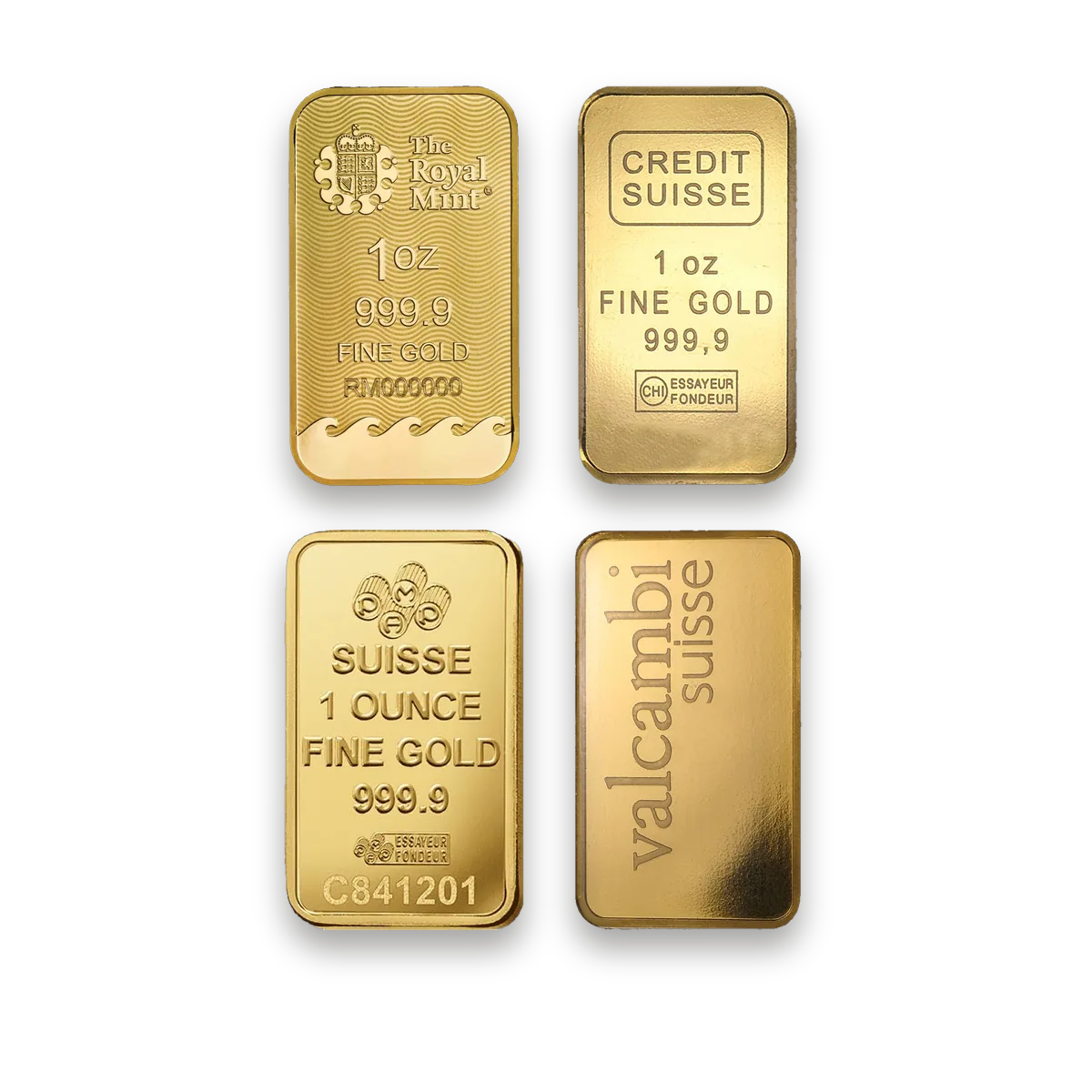
| 1 g gold bar | 1 g | 18% |
| 10 g gold bar | 10 g | 6% |
| 20 g gold bar | 20 g | 4.5% |
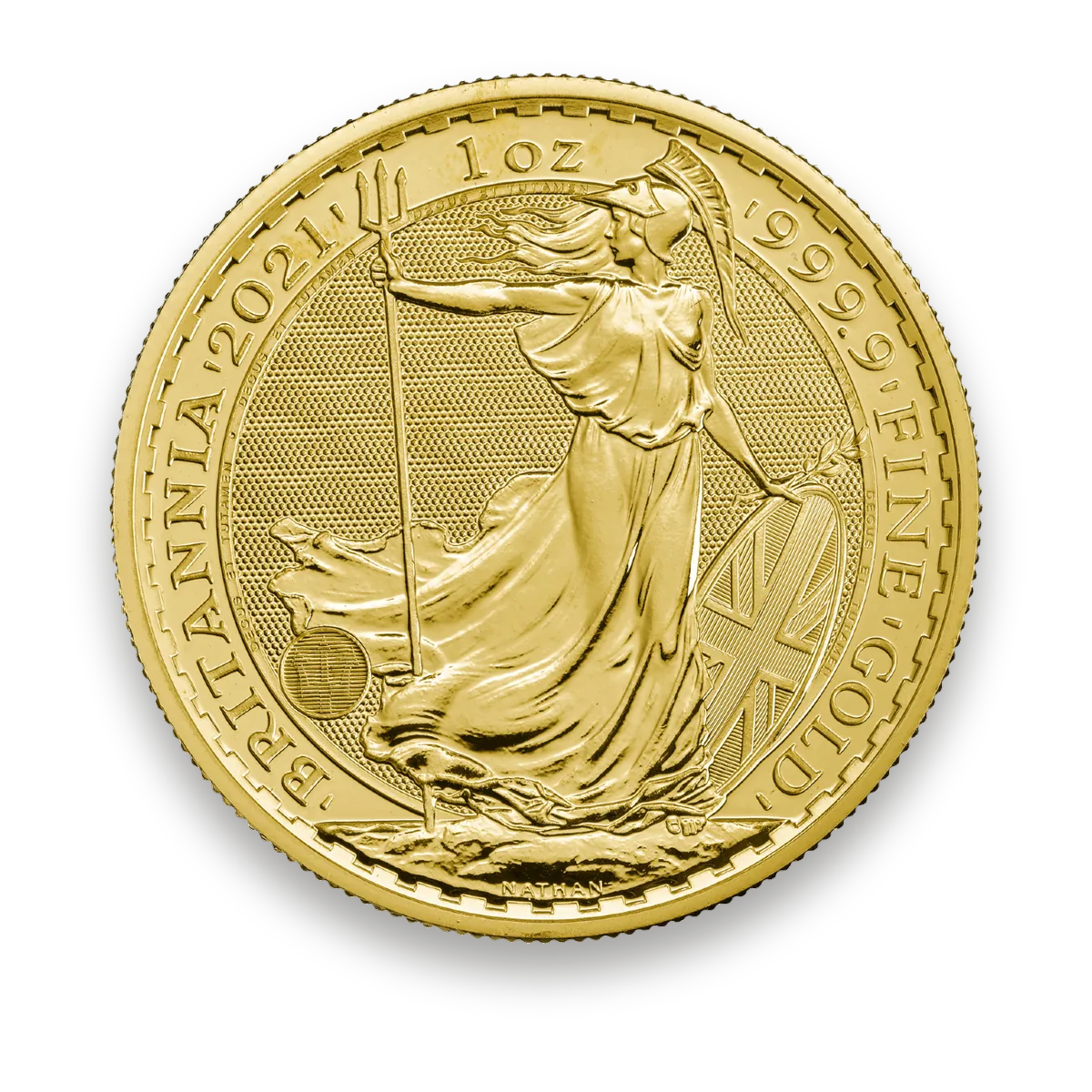
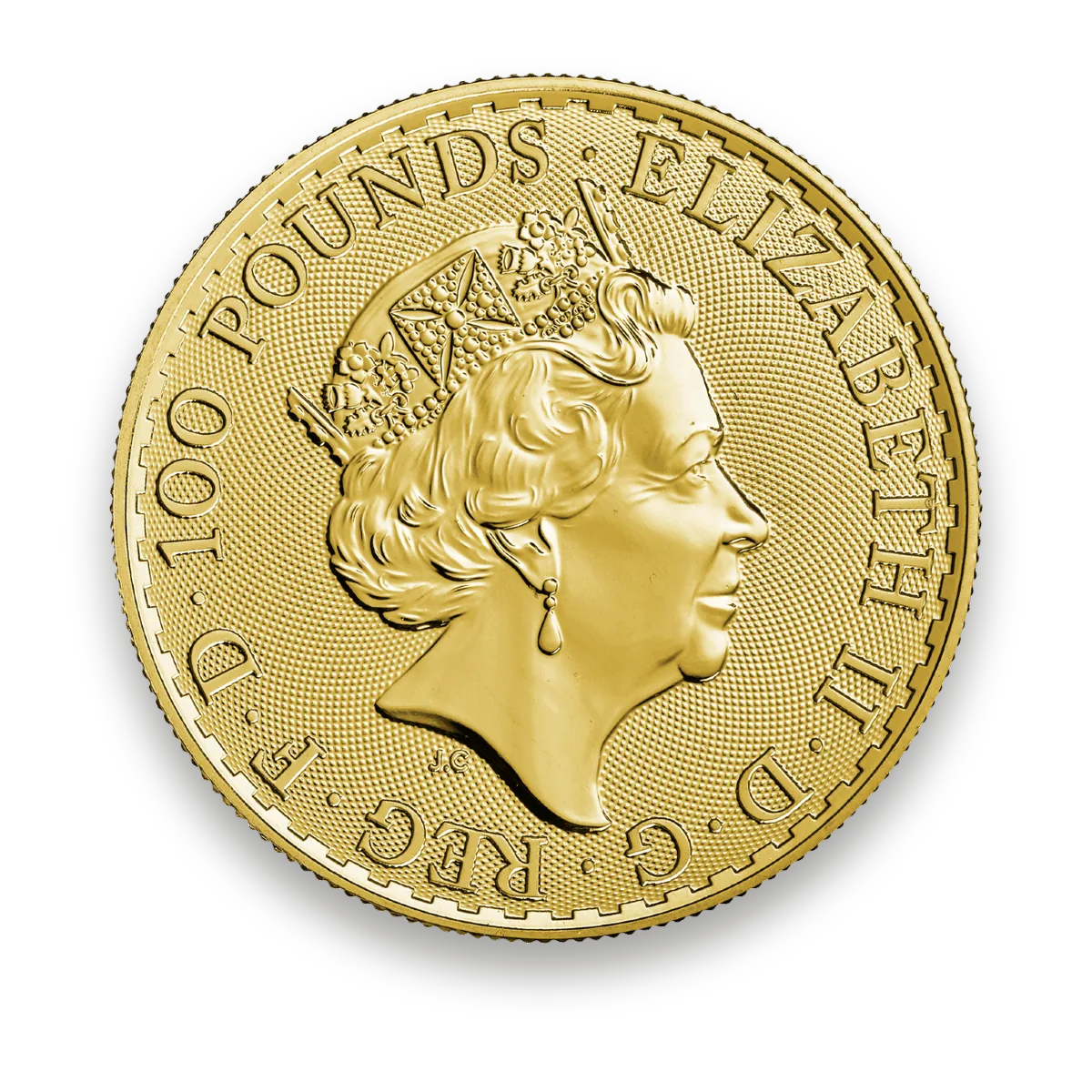
| Gold Britannia, 1/10 oz | 3.11 g | 10% |
| Gold Britannia, 1 oz | 31.1035 g | 4% |
| 1 oz gold bar | 31.1035 g | 2.8% |
Smaller pieces let you buy and sell in smaller amounts, at a higher cost per gram. Silver premiums are generally higher than gold's, because silver is far cheaper per ounce while the costs of making and shipping a coin are similar.
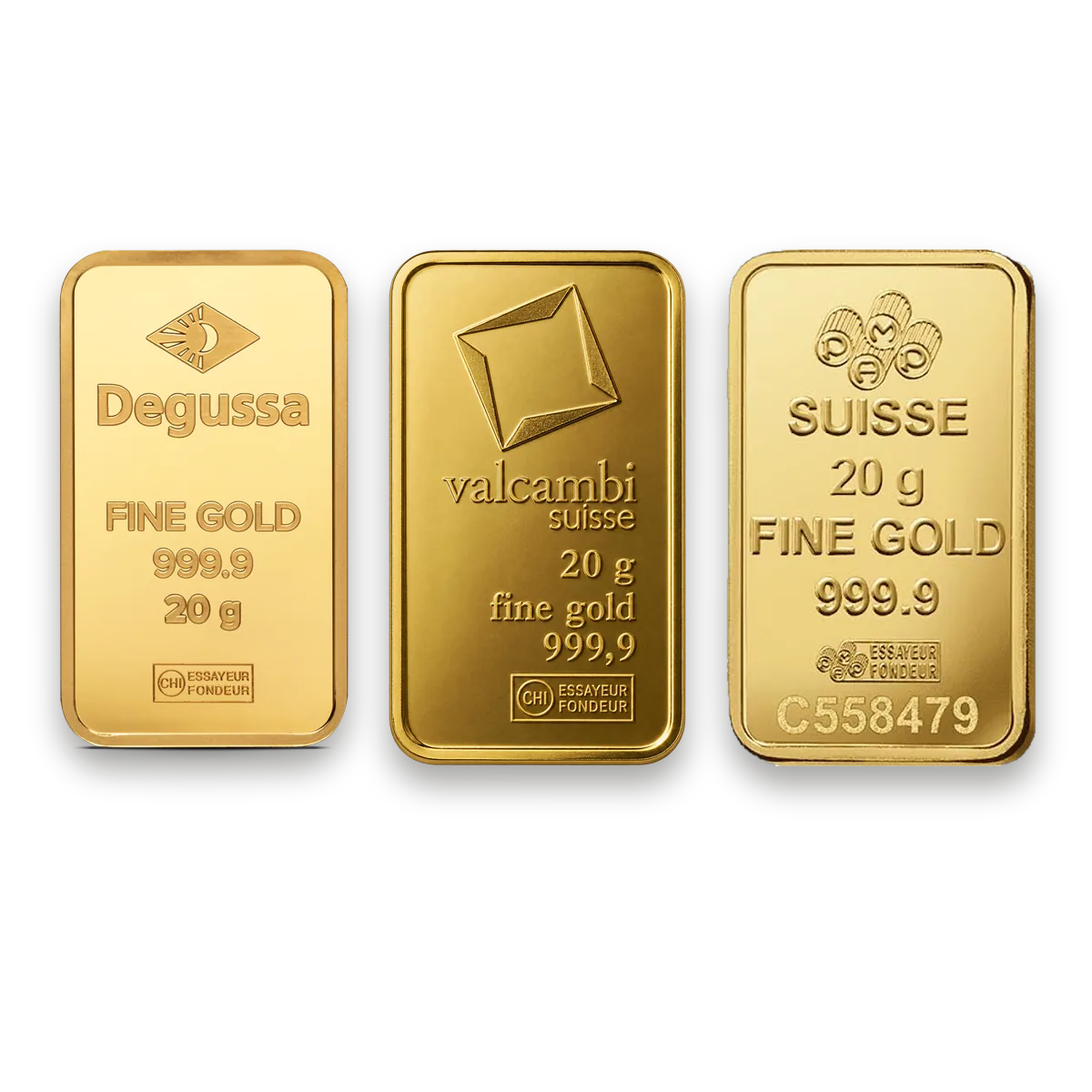
Gold bar 20 g
How exchange rates change the price
Precious metals are quoted internationally in US dollars per troy ounce. If you pay in pounds, euros, Swiss francs, Canadian dollars or UAE dirhams, the dollar price is converted at the current exchange rate. So your price can move even when the dollar price doesn't:
- If the dollar strengthens against your currency, the same dollar price costs you more.
- If the dollar weakens against your currency, it costs you less.
Often both move at once, so a chart in your own currency can look different from the dollar chart. Our charts show each metal in all six currencies we accept: GBP, EUR, USD, CHF, CAD and AED.
A worked example: how a price is built
The numbers below are hypothetical round numbers, chosen only to show the calculation. They are not today's prices or exchange rates; see the live prices on each product page.
Example 1: a 1 oz gold coin delivered to Germany, paid in euros
- Spot price (example): USD 2,000 per troy ounce × 1 oz = USD 2,000.
- Premium (example): 4%, so 2,000 × 1.04 = USD 2,080.
- Exchange rate (example): USD 1 = EUR 0.90, so 2,080 × 0.90 = EUR 1,872.
- VAT: investment gold is exempt, so the price is EUR 1,872.
If the dollar weakened to USD 1 = EUR 0.85 while gold stayed at USD 2,000, the same coin would cost 2,080 × 0.85 = EUR 1,768.
Example 2: a 1 oz silver coin delivered to Germany, paid in euros
- Spot price (example): USD 30 per troy ounce.
- Premium (example): 20%, so 30 × 1.20 = USD 36.
- Converted at USD 1 = EUR 0.90: EUR 32.40.
- VAT: silver carries Germany's standard rate of 19%, so 32.40 × 1.19 = EUR 38.56.
Investment gold is VAT-exempt in the UK, the EU and Switzerland. Silver, platinum and palladium carry the delivery country's standard rate, for example 20% in the UK and France and 22% in Italy. In France and Italy, a 1 g gold bar doesn't count as investment gold and carries VAT. On CC Holdings, VAT for UK and EU deliveries is included in the price shown and listed separately in your basket and invoice. We don't charge UK or EU VAT on deliveries to Switzerland, the US, Canada or the UAE; you may have to pay import taxes or duties there on delivery (in Switzerland, for example, import VAT of 8.1% on silver, platinum and palladium). The US has no VAT, but some states charge sales tax.
Selling later: the buy/sell spread
When you sell to a dealer, you are usually paid close to spot, not the price you paid. For widely recognised coins and bars, dealers typically pay a little below spot.
The gap between what you pay and what you would get if you sold straight away is the spread. It is made up of the premium, the dealer's discount to spot when buying back, and any VAT you can't recover. The spot price has to rise by at least that much before you break even.
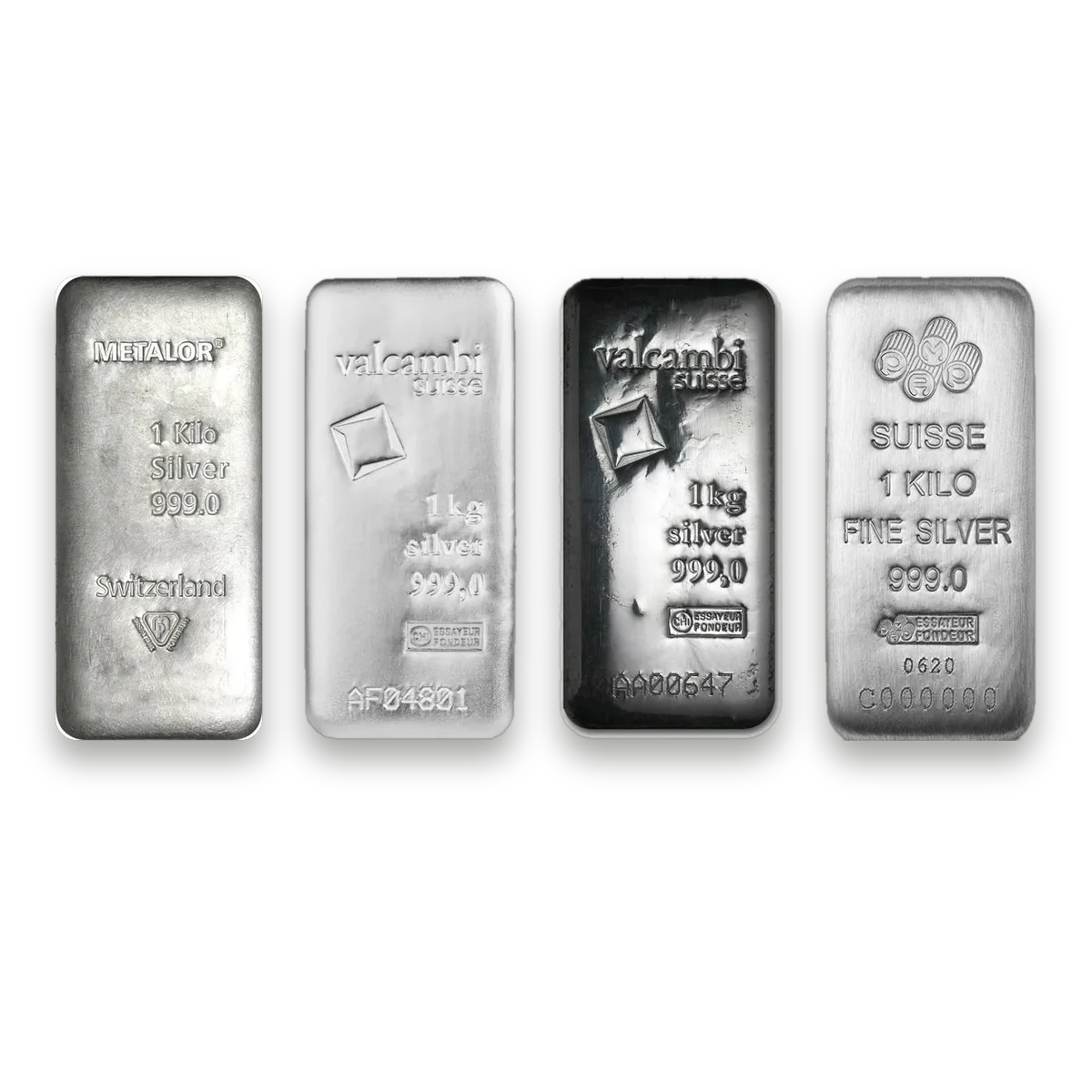
- Low-premium products, such as 1 oz gold bars or 1 kg silver bars, start with a smaller gap.
- Well-known coins and bars from recognised mints and refiners are usually easiest to sell close to spot.
- Gold avoids VAT in the UK, the EU and Switzerland; VAT paid on silver, platinum and palladium normally isn't returned when you sell.
Selling can also have tax consequences, which differ by country and change over time. In the UK, for example, some British legal-tender coins such as Britannias and Sovereigns are generally exempt from Capital Gains Tax for individuals. Please check with a qualified tax adviser where you live.
Selling back to us: our buy-back price
CC Holdings also buys gold, silver, platinum and palladium coins and bars from customers. We pay 97% of the live spot value of the fine metal content, with no fees or commission. You start a sale on our Sell to us page.
The premium you paid isn't returned when you sell, so the round-trip cost of buying a piece and selling it straight back to us is its premium plus 3% of the spot value, plus any VAT you paid on silver, platinum or palladium.
Example: a 1 oz gold bar, with the spot price unchanged (hypothetical round numbers, in US dollars)
- You buy at a spot price of USD 2,000 and a premium of 2.8%: 2,000 × 1.028 = USD 2,056.
- You sell it back at the same spot price: 2,000 × 0.97 = USD 1,940.
- The difference is USD 116, which is 2.8% + 3% = 5.8% of the spot value.
So the spot price would have to rise from USD 2,000 to about USD 2,120 (2,056 ÷ 0.97) before selling back to us returned what you paid. Read more in our guide on how to sell gold and silver.
Common questions
Why is the product price higher than the spot price on the chart?
The chart shows spot for pure metal in wholesale quantities. The product price adds the premium for that coin or bar and any VAT due for your delivery country. See the worked example above.
Why did my price change when the gold price didn't?
Most likely the exchange rate between the US dollar and your currency moved. Gold is quoted in dollars, so a change in the rate changes the price in your currency.
Is a lower premium always better?
You pay less above the metal's value, which is why larger bars cost less per gram. But smaller pieces and well-known coins can be easier to buy, store or sell in parts. It depends on what suits you.
Does the price change while I'm checking out?
At checkout your price is locked for 10 minutes; place your order in that time and that is the price you pay. Read more in how to buy gold online.